
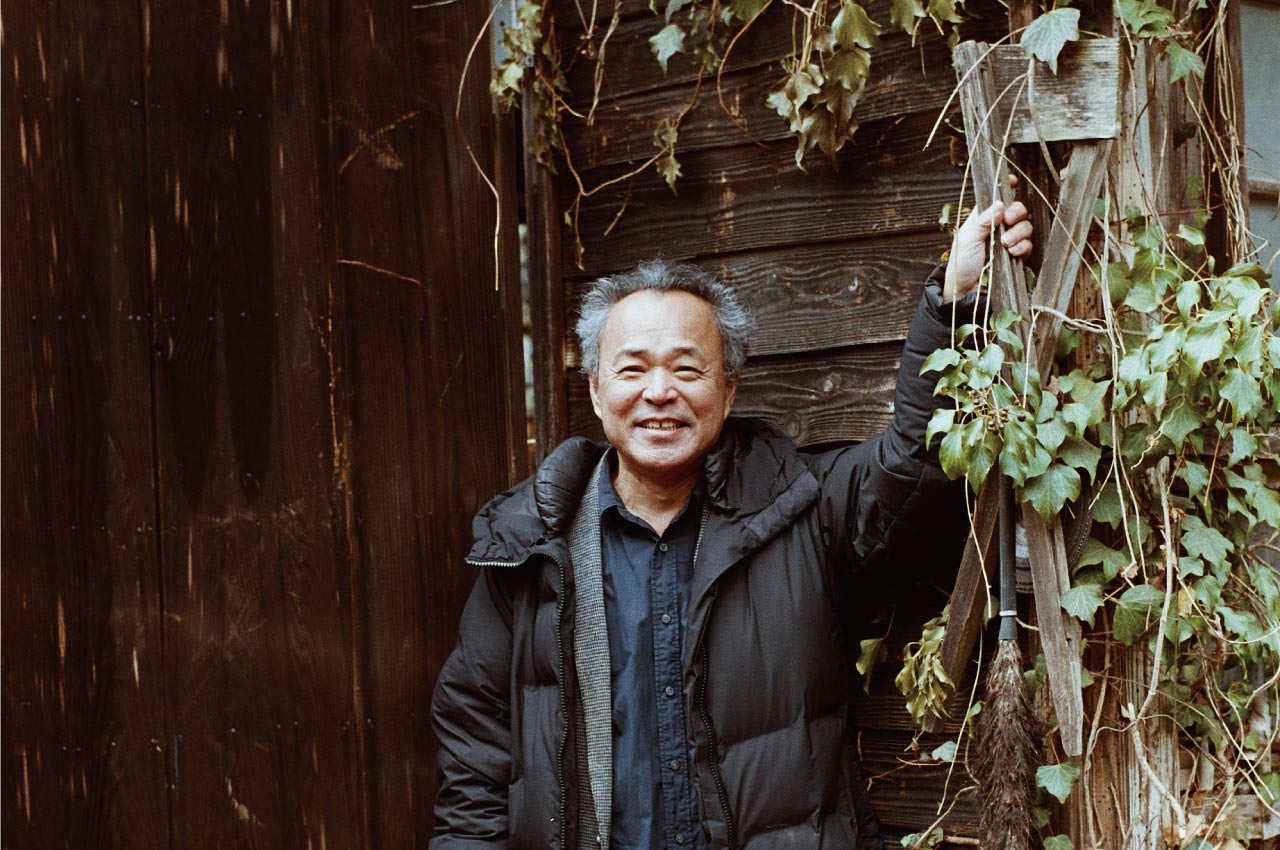
Mr.Yasushi Horibe Satologue architect 2024.05.21
【About the Concept】
-How did you approach the architecture and design process for this project?
Japanese chefs often say, “As long as the ingredients are good, there’s no need for strong seasonings or sauces. Just a little salt and the right amount of doneness is enough.” What I was trying to do here is similar. Locals may not realize this, but with such precious greenery, rivers, and fresh air, I thought there was no need for strong seasonings or to create a strange story. It’s really that simple.
-Is it about highlighting the local ingredients?
I’ve worked in various regions of Japan, and I feel that locals often don’t realize the good things about their hometowns. They take what’s there for granted and often ask, “What’s so good about it?” And for some reason, there’s a strong longing for the West and cities. For example, they might say, “This is Japan’s Mediterranean!” or name a downtown area in a regional city after the name “Ginza.” This isn’t a question of whether Japan is better or worse than the West, or the countryside or the city, but rather I think it’s part of the fact that we’re not properly evaluating the places close to us where we live. The countryside admires Tokyo, Tokyo admires the West, and the world admires space. In this way, we don’t value things close to us, but instead admire things further and further away, and we long for things we don’t have. I think this is something that needs to change from now on. We need to love the things close to us a little more. We live surrounded by things we should love, so I wanted to create a space where people can become aware of these things again.・
・
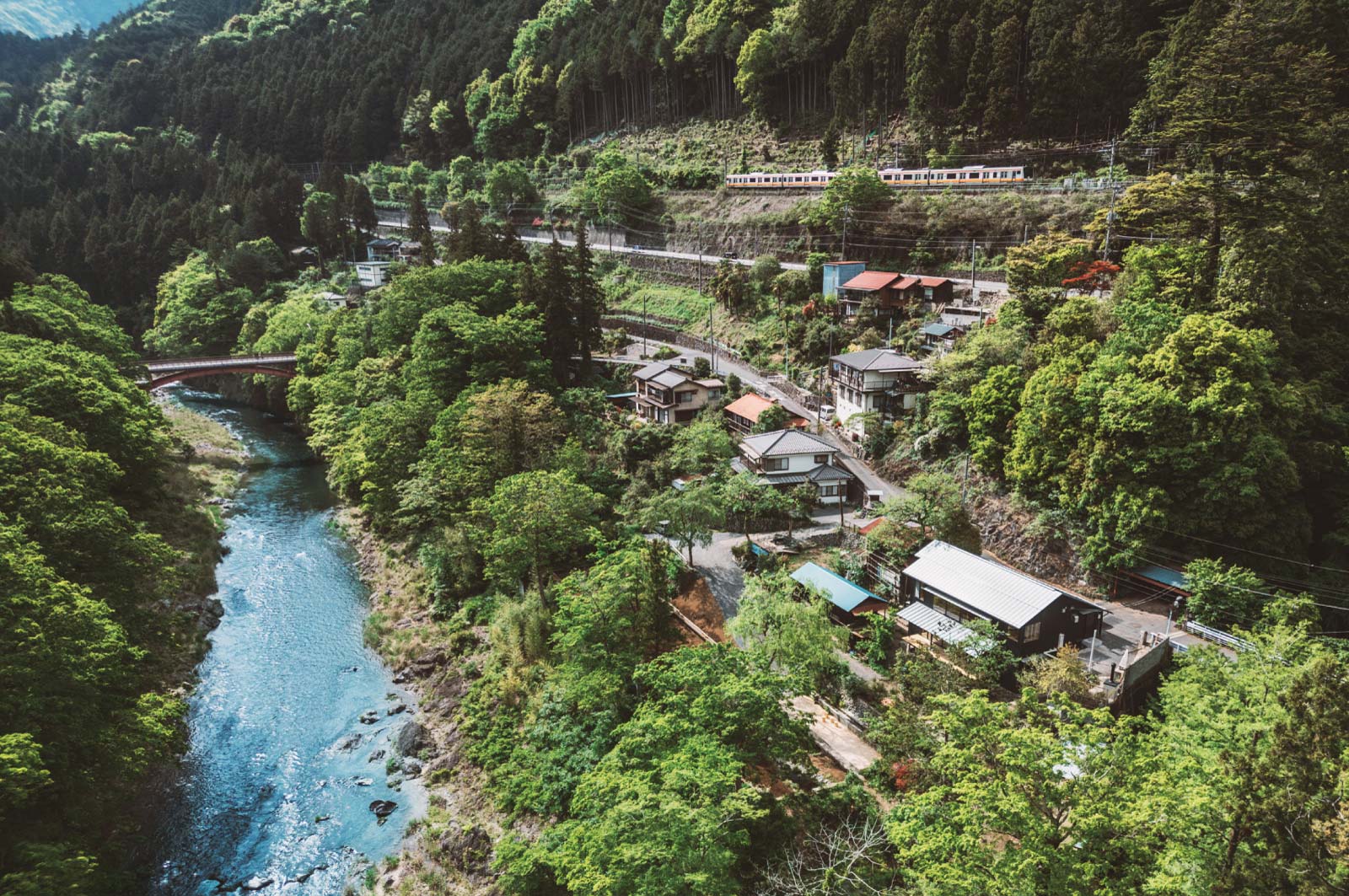
(Photo: Tanazawa Village, where Satologue is located. The silver-roofed building is Satologue’s restaurant. ©️Kazuhiko Hakamada)
【On the Wonders of the Okutama Region】
— Having been involved in various regions across the country, what are some of the great things about Okutama that you’ve noticed?
It’s the fact that there’s no “tourism! tourism!” clamor, and instead, untouched nature and unspoiled landscapes remain. There’s a comfortable feeling, free from any ambition to develop or make money. There’s no sense of overbearingness. I think that’s a very good thing. I feel that one of the great charms of the Okutama region is its calm, easygoing, fun, and down-to-earth atmosphere.
Also, I think the balance of nature is excellent. The relationship between the mountains and rivers, the food that can be found there, and various other elements are condensed into a well-balanced ensemble, giving it a miniature-like charm, like a miniature garden of rural Japan.
-Indeed, it feels like human life fits nicely into nature and is thriving.
It’s like the Japanese hometown we all imagine, the kind of place that would be the setting for a boy’s summer vacation. Diving in the river, catching bugs, eating watermelon—those kinds of places are so much fun as a child, aren’t they? I think Okutama is a place that embodies that setting.
・
・
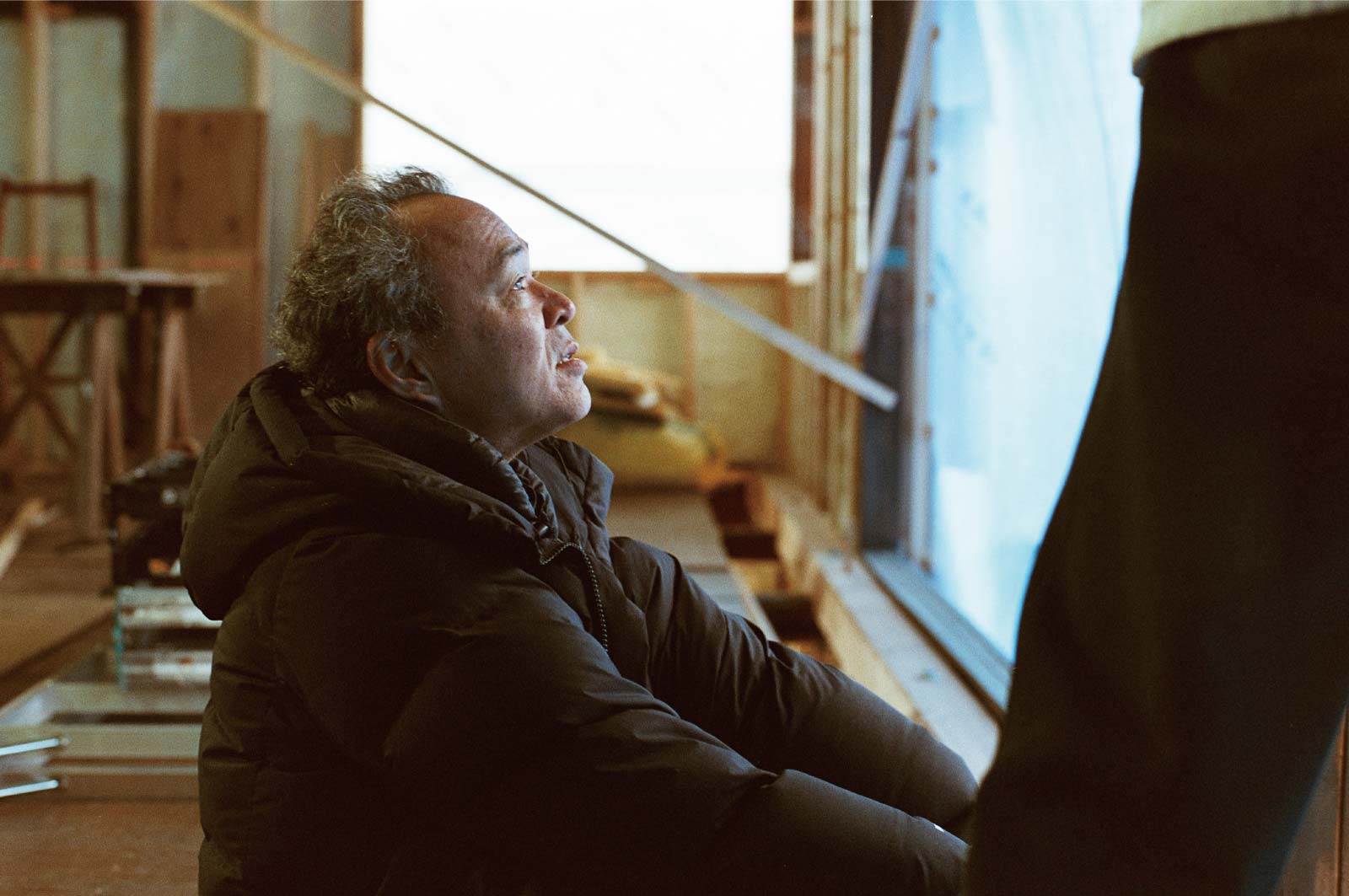
(Photo: Mr. Horibe at the construction site. ©️Daisuke Takashige)
– Okutama, with its rivers, mountains, and steep slopes, is a landscape that is quintessentially Japanese, with people living intelligently in harmony with nature.
I think the basic characteristics of Japan’s geography are its steep mountains, and when it rains, the water quickly trickles down the mountains into rivers. I often visit Finland, and like Japan, it is a forested country, with 60-70% of the land covered in forest. However, unlike Japan, there are no mountains; instead, Finland’s geography is simply flat, forested land. There are no rivers, just lakes. Of course, I can appreciate the beauty of the flat forests and lakes, but I sometimes find it strange that there are no elevation changes in the terrain. Rivers are beautiful because the water is constantly moving and never stagnates. After a sauna in Finland, when I’m soaking in stagnant water like a lake, I sometimes long for the river. I wish I could “restore” myself in a river. In Finland, I often realize the beauty of rivers – the purity of the water, the gratitude for water that is always moving. It’s good to realize that things that we take for granted in Japan are not so obvious, and to be able to recognize the value of things that are close to us.
–The gratitude for rivers, you say? No matter how rich you are, you can’t dig a river, after all. (lol)
・
・
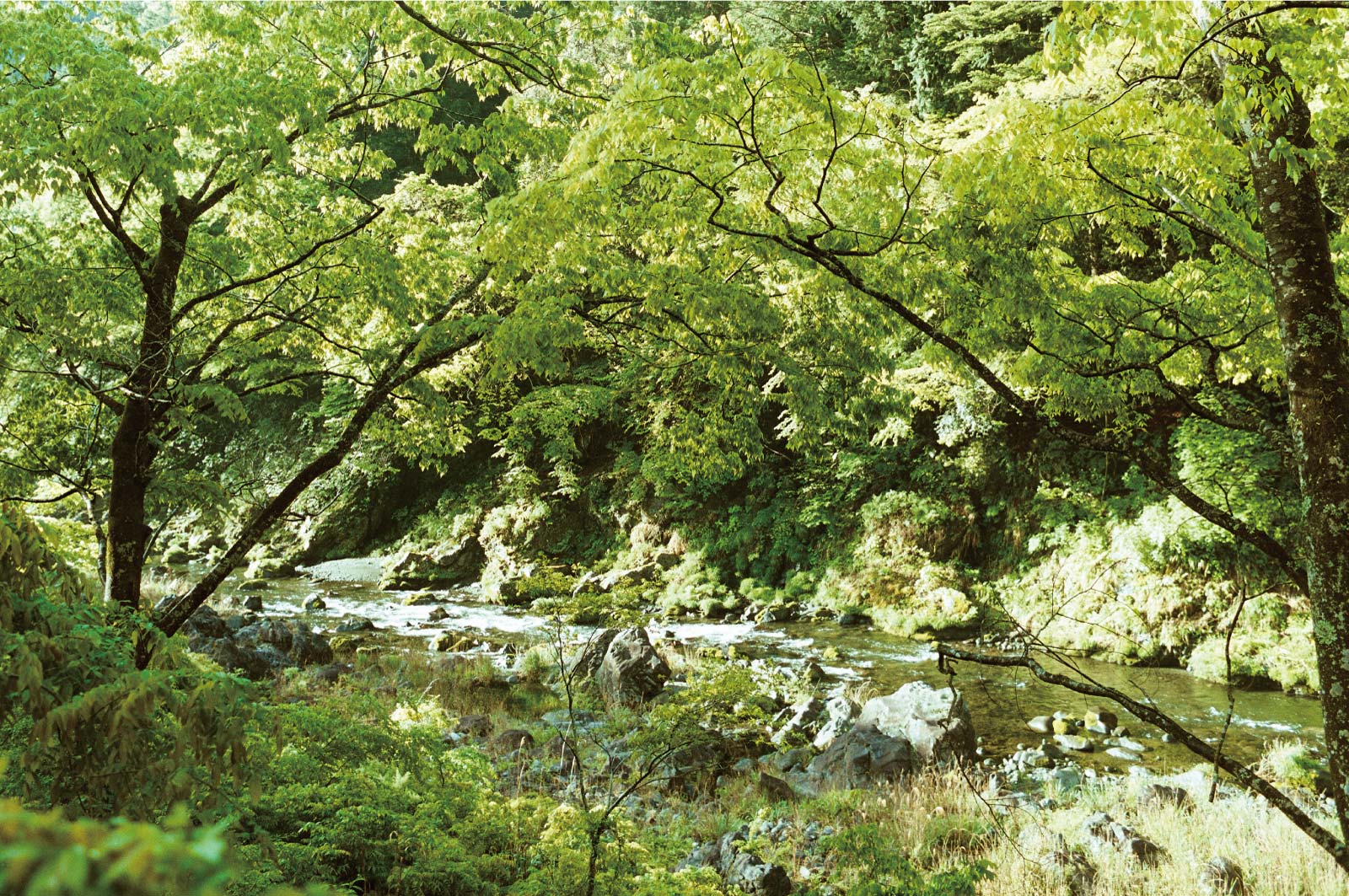
(The Tama River flows right next to the Satologue property. It’s a popular spot for anglers, where you can catch delicious sweetfish. ©️Daisuke Takashige)
【On the Wonders of the Site and Environment】
–Regarding the theme of “making the most of what’s available.” What are the things on this site?
The Satologue site is a wonderful place to enjoy the river. The river flows right next to us, making it a powerful presence, but we’re also grateful that the terrain is less susceptible to flooding. Japan’s diverse elevation changes and water currents, concentrated within a small land area, make it unique, beautiful, and dynamic, but also subject to many natural disasters. For example, the image of European rivers, such as the Danube, Seine, and Rhine, is that they flow slowly and are relatively free of disasters. That’s why cities like Paris, London, and Budapest have developed along rivers. In Japan, on the other hand, there’s a historical perception that rivers cause trouble by flooding, and riverside areas have been avoided. In that sense, this place is truly blessed.
–Indeed, this place not only has great river views, but it’s also on a slope, so it’s sunny, the breeze is pleasant, and it feels like a comfortable place to live.
Below is bedrock, so the ground here is very good. I think the good ground is also a factor in why the old building we renovated has survived for so many years. The fact that it’s on a south-facing slope is also a big factor. I’ve thought a lot about what makes a comfortable place for humans and where we should live, and south-facing slopes offer the perfect conditions: abundant water, good drainage, and good sunlight. I always think that humans really prefer to live in places like this. I think this location is truly excellent topographically.
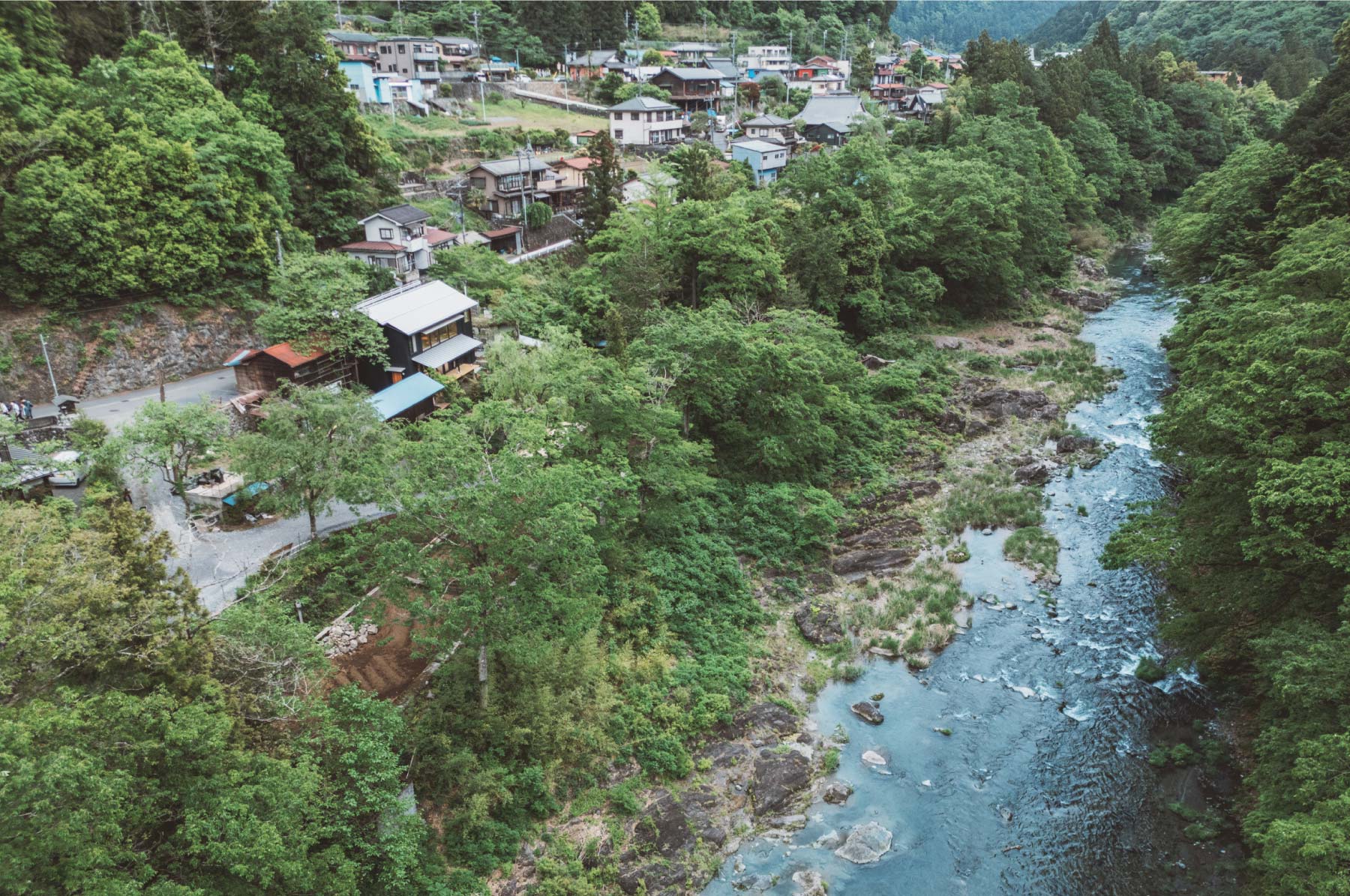
(Photo: View of Satologue and the surrounding villages. Houses line the southern slope. ©️Kazuhiko Hakamada)
-How did you utilize the site’s excellent features in the architecture?
The site is home to a canal carrying water from the river, a vestige of the former fish farm. It’s fascinating how the water cycle and the human activities that depend on it can be visualized within this small plot of land. I wanted a space that would allow one to sense the quality of the ground, while also planning in a way that would not disrupt this small cycle of natural circulation.
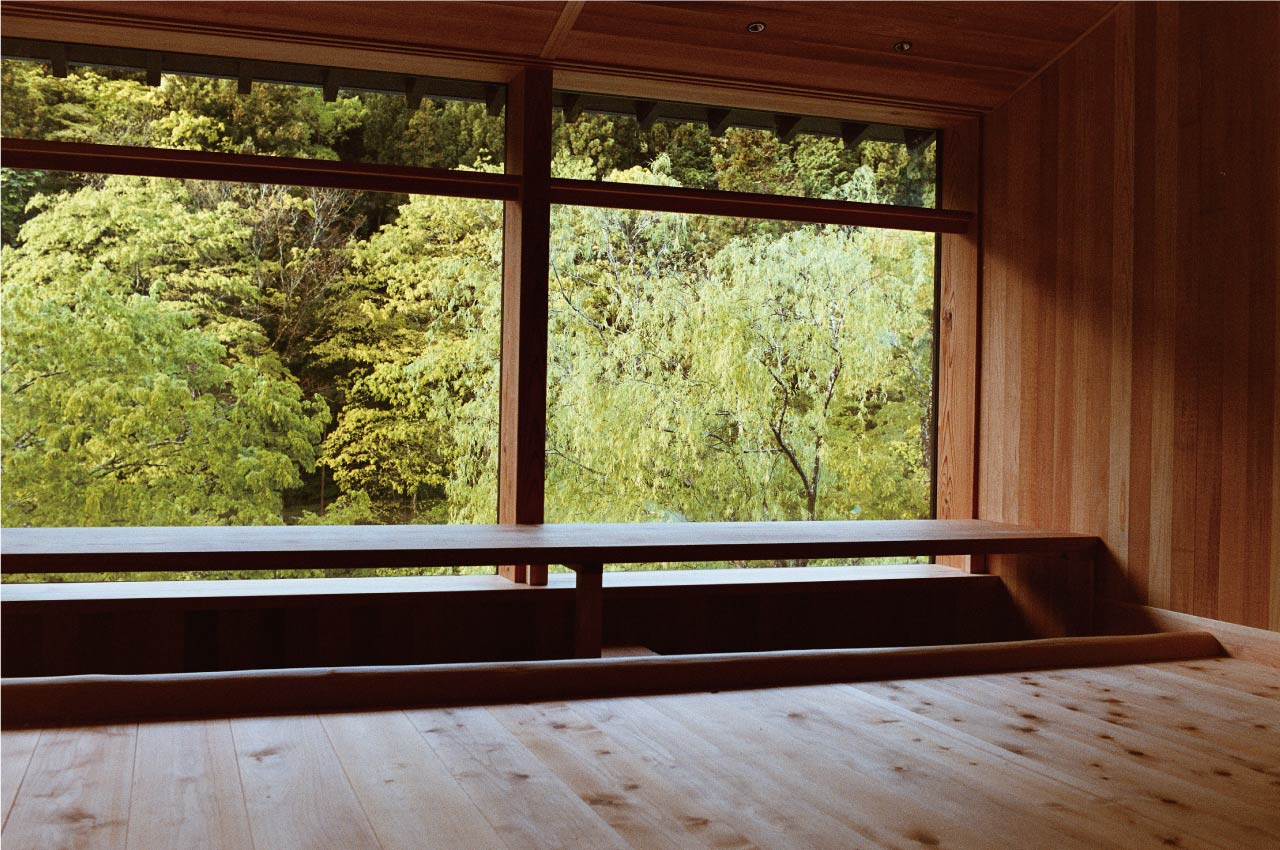
I think the design of the restaurant, which will be the main attraction, will be a major theme for the facility, and I struggled with this very much. I considered a lot of options, such as whether to eat sitting on chairs or on tatami mats, but ultimately decided on a sunken kotatsu style seating for the main dining area, so that diners can dine close to the floor with a lowered center of gravity. The spatial design allows guests to enjoy their meal and conversation as if they were sitting down by the river or on solid ground. If the center of gravity were higher, I thought the natural circulation system I mentioned earlier would feel a little off. By sitting down, you feel as if you’re part of that cycle.
–So the key is to sit on the floor, where the center of gravity is lowered, rather than on a four-legged chair.
The original house also had a large tatami room, so I think the center of gravity of the living space has always been low. I think we’ve been able to preserve the view that the people who lived here enjoyed.
・
・
(Photo: Satologue restaurant. Counter seating with a sunken kotatsu facing the window. ©️Daisuke Takashige)
【About the Exterior】
I feel there’s another charm to Okutama. That’s the lack of strange buildings. Nothing strangely extravagant, nothing new. The buildings are simple and appealing, in a very good way.
–Indeed, there’s nothing strangely flashy.
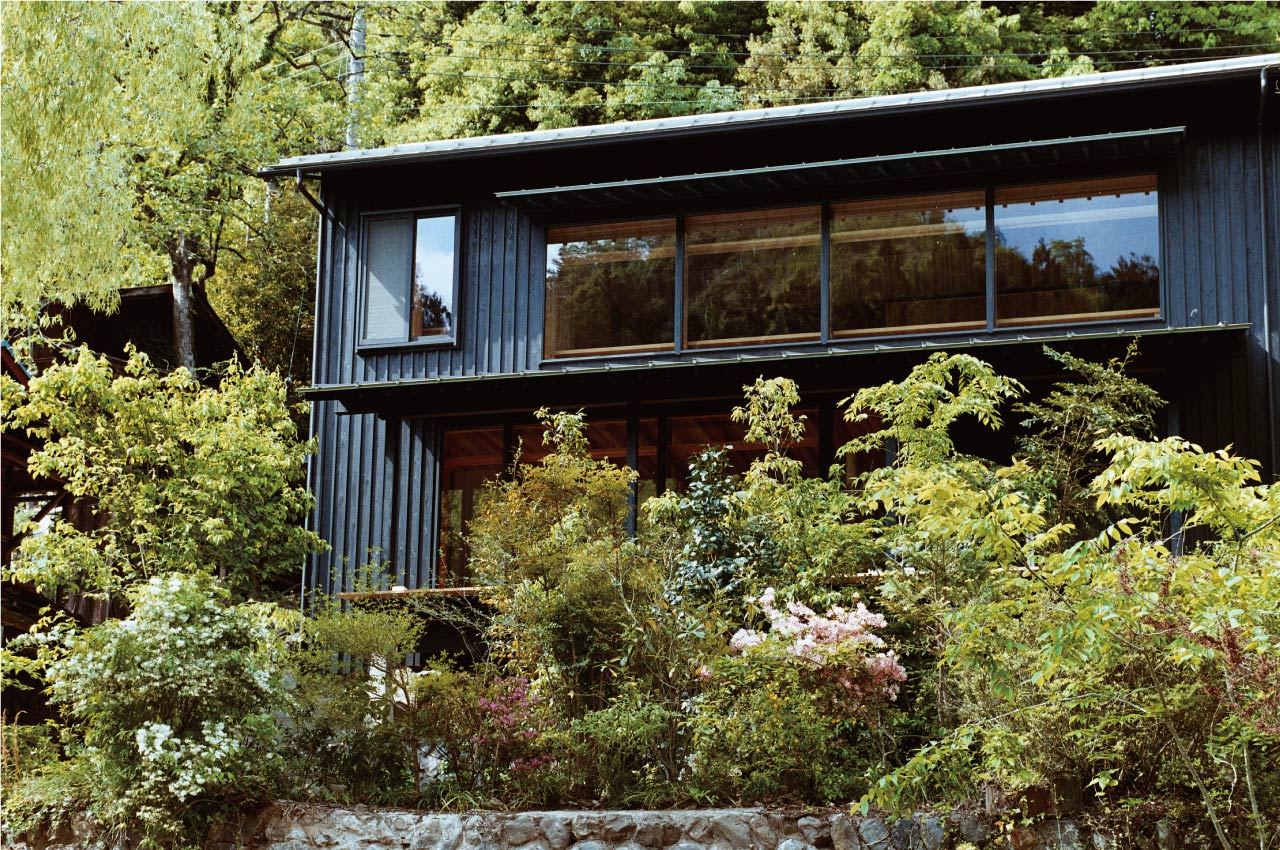
You hardly ever see any buildings that seem to disrupt the crowd or stand out. They’re “unmotivated,” in a good way. There’s no ambition to do anything outlandish, and that fits the overall atmosphere of the property, which I think is very positive. So, the exterior of this renovation has simply been spruced up a little, and is, so to speak, “unmotivated.” Simple is a good word, but there’s no unnecessary effort put into it.
–The exterior somehow feels like it was always there.
・
・
(Photo: Satologue exterior. ©️Daisuke Takashige)
This time, my co-designer, Mr. Ito (Yoshinori Ito), is also basically “unmotivated.” Mr. Ito, you hate “motivated” architecture, don’t you?
(Mr. Ito): Yes.